Share W Lee Hansen's obituary with others.
Invite friends and family to read the obituary and add memories.
Stay updated
We'll notify you when service details or new memories are added.
You're now following this obituary
We'll email you when there are updates.
Select your format and elements to print

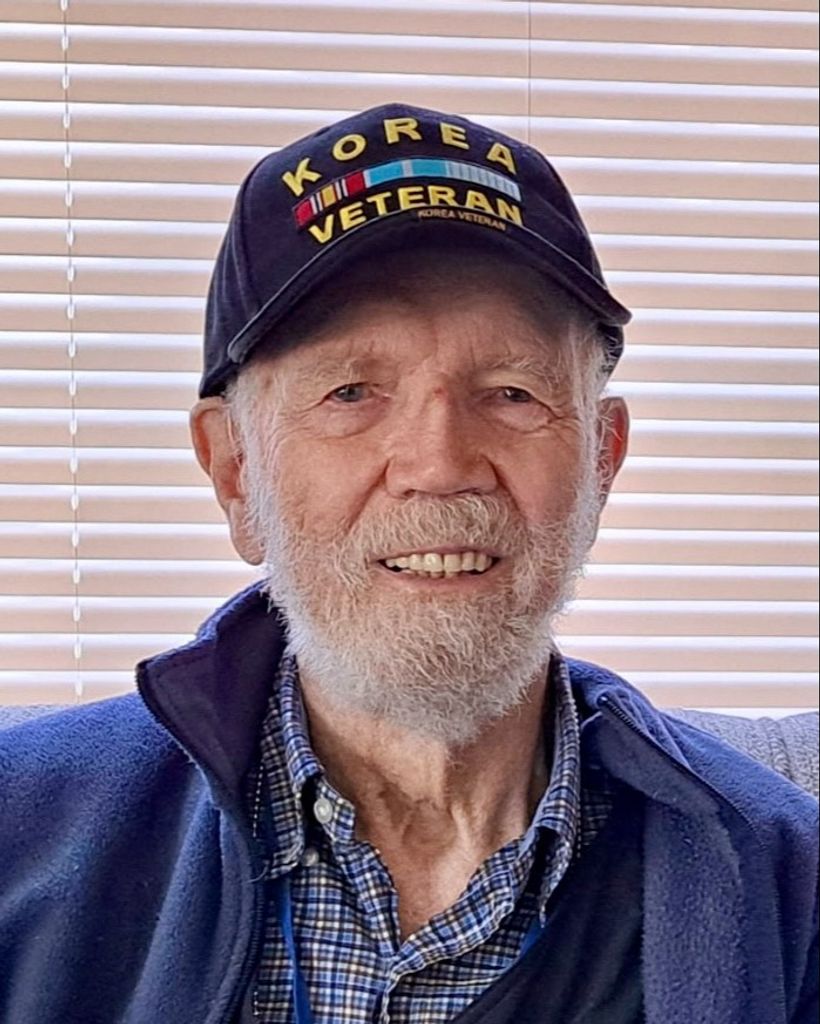


W Lee Hansen
Nov 8, 1928 — Dec 7, 2025
Madison
William Lee Hansen, a man of intellect, integrity, energy, and enthusiasm, died peacefully at home with his daughters by his side on December 7, 2025, at the age of 97.
Born in Racine, Wisconsin, on November 8, 1928, to William R. and Gertrude (Spillum) Hansen, Lee was deeply influenced by his parents’ belief in the value of education and hard work. Inspired by his father’s oft-repeated exhortation to his children to “Be yourself!”, that was exactly what W. Lee Hansen did throughout his long and full life.
After graduating from Washington Park High School in 1946, Lee attended UW’s Racine Extension Center for his first two years of college and then transferred to Madison for his junior and senior years. He graduated with honors from UW-Madison in 1950, majoring in international relations. In both high school and college, he participated in numerous extracurricular activities, serving as editor of his high school newspaper and helping to establish the Athenaean Literary Magazine while at UW-Madison.
Shortly after graduating, he was drafted into the U.S. Army to serve in the Korean War and became a member of the Joint American Military Mission for Aid to Turkey, a U.S.-led initiative to modernize the Turkish Army in an effort to thwart Soviet threats to seize Turkish territory in order to gain access to the Mediterranean Sea. In 1953, the USSR responded by withdrawing its territorial demands, and Lee took great pride in having been a part of this important Cold War victory over the Soviets.
The experience left him with a lasting appreciation of the Turkish people and their culture and also marked the beginning of his extensive collection of Oriental rugs. And it was here where he embarked on what proved to be his calling – teaching. While training at Camp McCoy, he was tasked with instructing his fellow draftees on their military mission, and in Turkey, he taught English to Turkish Army officers and local young people in his spare time.
Upon returning to UW to pursue a master’s degree, he met Sally Porch, who was, like him, serving as a UW residence hall housefellow while studying for her master’s degree in English literature. Their first date at campus hangout the “Hasty Tasty” was made memorable by the fact that Sally, an incipient feminist who was determined to pay her own way, pressed upon Lee a dollar to cover her half of the pitcher of beer they had shared, to which Lee responded by taking the dollar bill and tearing it in half (!) in order to humorously but firmly insist on paying for their date, as he felt was the polite and proper way to treat the woman who had quickly charmed him with her intelligence and wit. For one of the few times in her life, Sally was left speechless, but this soon gave way to laughter, and thus their romance began. The two then went their separate ways as previously planned, Sally to teach in Detroit and Lee to begin his doctoral studies at Johns Hopkins University in Baltimore, but they quickly began a correspondence courtship by mail which soon led to their engagement. In Sally, Lee felt he had found his intellectual equal, and their marriage in 1955 marked a union of both hearts and minds that was to last for 60 years.
Lee was awarded his Ph.D. in 1958, a year also notable for the birth of Lee and Sally’s first daughter Ellen, in Washington DC, followed two years later by Martha, born in Santa Monica CA in 1960. The family’s early years were punctuated by multiple moves, from Baltimore to UCLA for Lee’s first teaching position, to the University of Chicago for a postdoctoral fellowship, back to UCLA for a year, and then a year in Washington DC where Lee served as Senior Advisor for the President’s Council of Economic Advisors under the Johnson administration. The strain on Sally caused by yearly moves as a young mother with two small children was finally relieved when Lee received a tenure offer from the University of Wisconsin. The family moved to Madison in 1965, and, after a brief stint in University Houses, Lee and Sally purchased a house in Shorewood Hills which remained the family home for the next 50 years.
Lee’s career at UW-Madison was an illustrious one. He served as Chairman of the Economics Department (1971-74), Co-Director of the UW System Manpower Institute (1978-82), and Director of the Industrial Relations Research Institute (1983-87). He was a Visiting Professor at the University of Minnesota, Fulbright Scholar at the University of Sydney (Australia), Academic Visitor at the London School of Economics, and Visiting Professor at the University of Western Australia and the University of Maastricht (Netherlands). He received numerous awards, including election to Phi Beta Kappa, a Guggenheim Fellowship, and a Fulbright Senior Scholar Award. He was honored at UW-Madison with a Distinguished Teaching Award, the Hilldale Award for Distinguished Professional Achievement at UW-Madison, and election in 1994 to UW’s Teaching Academy. He was a valued mentor and advisor to many fortunate students over the years.
He also participated extensively in outside professional activities, among them committees of the National Science Foundation, National Research Council, American Association of University Professors, and the American Economics Association. He was recognized for his extensive work in economics education, including the James Taylor Award for Excellence in Teaching Economics from the Wisconsin Council on Economics Education and the Distinguished Educator Award for “creativity, enterprise, and achievement in entrepreneurship and free enterprise education” from the National Federation of Independent Business Foundation. He retired with emeritus status in 1998.
Lee was a longtime proponent and defender of academic freedom, and over the years weighed in on various campus educational policy issues, including the discontinuation of the foreign language requirement and the revival of a two-semester writing requirement for entering freshmen. He was a persistent critic of campus affirmative action programs, over the years amassing voluminous data to support his belief that these well-intentioned efforts were failing to achieve their goals. Despite the unpopularity of some of his opinions, as well as his generally nonconfrontational nature, he held to his positions in the face of the criticism, isolation, and controversy that followed.
Community involvement was also important to him: Lee contributed generously to local charitable causes, was a long-time and active member of the First Unitarian Society of Madison, and weighed in on Shorewood Hills issues; undaunted by a lack of expertise in road construction or street design, he proposed a re-design of the University Avenue/Shorewood Boulevard intersection which was accepted by the authorities and remains an important safety improvement to this day. In recent years, Lee played a crucial, albeit unpopular, role in issues affecting Oakwood Village, where he resided from 2013 until his death.
In his younger days, Lee had the natural talent to be able to play a respectable game in all manner of athletic pursuits, including ice hockey, tennis, softball, and golf. He was a die-hard cyclist, riding his bike to the UW campus on even the coldest and snowiest days. He enjoyed birdwatching, cooking, and baking, achieving local fame for his annual Christmastime distribution of the beloved date nut bread he made from his mother’s recipe. Lee enjoyed traveling, both with Sally and on his own, and visited many countries around the world over his lifetime.
Always an avid reader who loved engaging with ideas, Lee participated in a local Great Books discussion group for more than 40 years and was the oldest living member of the ABC book group, inaugurated in 1995 and comprised of retired UW faculty members who read and discussed books on historical and scientific subjects. Even as his sight faded due to his worsening macular degeneration, Lee remained an active participant in the group by switching to audiobooks.
A true family man, Lee took an interest in family history and genealogy, tracing his mother’s Swedish/Norwegian roots and his father’s Danish background; his writeup on his Danish immigrant grandmother’s poetry-writing was recently published in The Bridge: Journal of the Danish American Heritage Society. He maintained long-term friendships and stayed in touch with relatives near and far. He responded heroically to the dementia that tragically afflicted both his brother and his wife, providing devoted care to Sally until her death and to Harlan as long as he was able.
Lee was an exceptional father. Ahead of his time, he raised his daughters in a gender-neutral way by gifting them with “boys’” toys and not only teaching them to use tools, but sending each off to college with a mini toolbox containing hammer, screwdriver, wrench, etc., to enable them to hang pictures or make small repairs in their dorm rooms. In this way, they were unique in their residence halls: NOBODY else’s dad thought of this! He instilled in them a lifelong love of books by reading to them nightly, raising them in a house full of books, and regularly taking them to the public library. He was able to sew on a Brownie badge in a pinch, and, by consistently attending parent-teacher conferences as well as school concerts and performances, encouraged his daughters’ academic achievement and participation in other activities. He took them to all kinds of cultural events and performances, ranging from the Ringling Circus, UW hockey, and the Harlem Globetrotters at the Dane County Colosseum, to Shakespeare, Chinese opera, and Marcel Marceau at the Wisconsin Union Theater.
In spite of his education and erudition, Lee wore his learning lightly and was never condescending, instead treating everyone he met with kindness, curiosity, and respect. He took an interest in all kinds of people on all kinds of paths in life and often leavened his interpersonal interactions with the gentle humor that endeared him to so many.
Lee was preceded in death by his parents, his wife Sally, his brother James, and sister Phyllis. He is survived by his brothers Forest and Harlan, daughters Ellen and Martha, and four grandchildren.
A Celebration of Life will be held at Oakwood Village - Resurrection Chapel 6205 Mineral Point Road, Saturday, May 16th at 2:00 p.m. Friends and family are welcome to gather from 1:00 p.m. until the time of service. In lieu of flowers and in thanks for their exceptional care, the family requests contributions to Agrace Hospice or the UW Carbone Cancer Center.
LIVESTREAM LINK: Celebration of Life for W. Lee Hansen - Livestream will begin at 1:50 p.m.
Cress Center
6021 University Ave. Madison
(608) 238-8406
Service Schedule
Past Services
Visitation
Saturday, May 16, 2026
1:00 - 2:00 pm (Central time)
Oakwood Village - Resurrection Chapel
Visitation
Saturday, May 16, 2026
1:00 - 2:00 pm (Central time)
Oakwood Village - Resurrection Chapel
Celebration of Life
Saturday, May 16, 2026
Starts at 2:00 pm (Central time)
Oakwood Village - Resurrection Chapel
Guestbook
Visits: 1239
This site is protected by reCAPTCHA and the
Google Privacy Policy and Terms of Service apply.
Service map data © OpenStreetMap contributors