
Share Burnie Bridge's obituary with others.
Invite friends and family to read the obituary and add memories.
Stay updated
We'll notify you when service details or new memories are added.
You're now following this obituary
We'll email you when there are updates.
Select your format and elements to print


IN LOVING MEMORY OF Burnie Bridge
Burnie
Bridge
Sep 16, 1948 — Oct 13, 2026
Funeral Services for Burnie Bridge
Visitation

Sunday
Cress Center
1:00 - 2:00 pm (Central time)
Celebration of Life
Sunday
Cress Funeral & Cremation Service - Madison - Far West
2:00 - 2:45 pm (Central time)
Burnie Bridge's Obituary
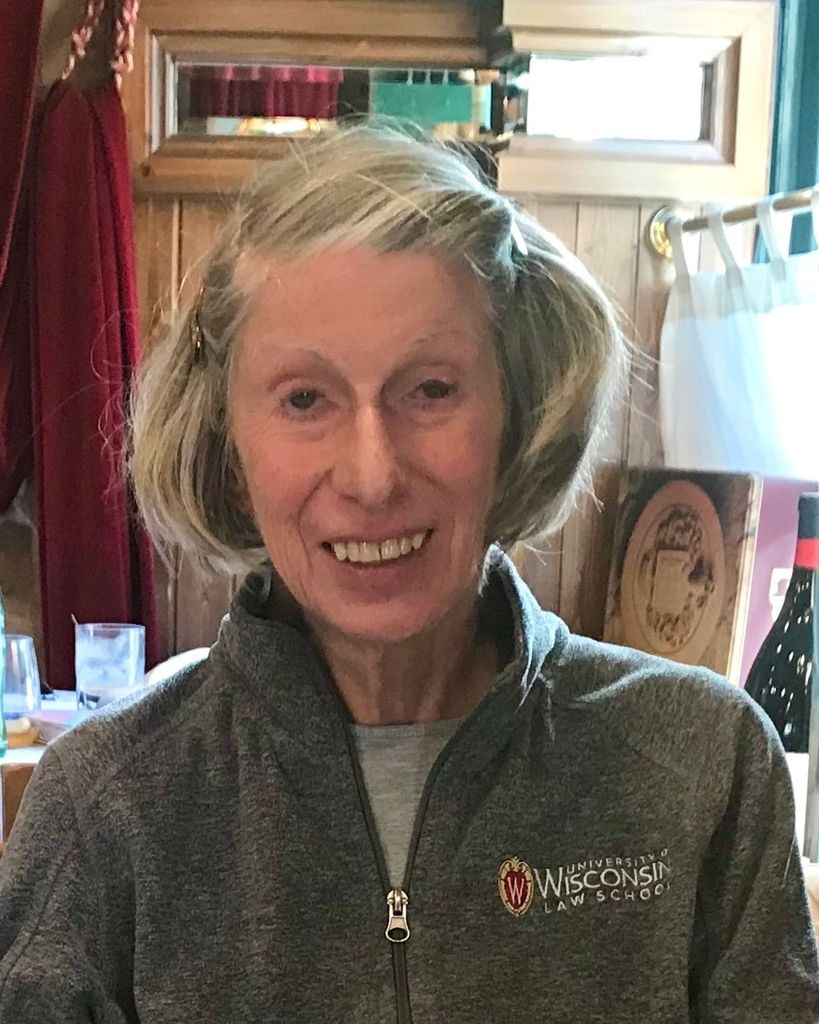
Burneatta “Burnie” Bridge, 78, retired Judge of the Wisconsin Court of Appeals, former Chief Deputy Attorney General of Wisconsin, loving wife, warm and witty friend, mentor to many, great cook, and expert gardener, passed away peacefully at home on Oct., 13, 2026. John, her husband of 42 years, was by her side.
Burnie’s legacy includes an abundance of rich personal relationships and a lifelong commitment to the public good. During her many decades of public service in Wisconsin, Burnie often was entrusted with leadership roles of immense responsibility and breadth. At various times, she oversaw the regulation of public utilities, ensured the safety of foster children, took on the tobacco industry, and helped manage a state office with more than 50 lawyers, 200 undercover law enforcement officers and three crime labs. In matters large and small, whether high profile or relatively unseen by the public, Burnie was known for her integrity, hard work, adherence to the law, and ability to see the right way to a just and practical result.
Burnie was born on September 16, 1948, in the sparsely populated township of Grand Rapids, Minnesota. Her parents, Delbert Hurst Bridge and Maxine Lorraine (Winters) Bridge, built and operated a small resort and her father worked as a fishing guide and school bus driver. As Delbert sought better jobs with more financial security, the family moved with some frequency to towns in the northern and central Midwest. During Burnie’s senior year of high school in Port Clinton, Ohio, a teacher identified Burnie as “college material.” It was a perceptive observation and a major understatement. In the fall of 1966, Burnie was off to college at Miami University in Oxford, Ohio, graduating with honors four years later with a degree in English literature.
College was eye-opening for Burnie. She found herself in the middle of the social upheavals that were occurring, especially on campuses, in the late 1960s. The currents of the civil rights and women’s movements were strong, and society was changing in profound ways. Burnie was attuned to those currents and changes, and even as a young woman was willing to do what she believed was right, sometimes at personal cost. She had joined one of the college’s sororities and was part of its recruitment committee. When she realized they would not be permitted to recruit women of color, she objected, whereupon she had to stand up in front of the entire group, state her position on the matter, and suffer the indignity of being “de-pinned.”
Her commitment to equality took her to Jackson, Mississippi, in 1976, where she became the Executive Director of the Mississippi chapter of the American Civil Liberties Union. It was an intense time for the civil rights movement in Mississippi. Segregation remained widespread and rigid. Burnie marched in Freedom Marches, during which whites were the minority of marchers and at which members of the Ku Klux Klan lined the streets. Resistance to the end of segregation was strong and the threats of violence from the KKK were real. In the face of this tension and fear, Burnie gained some comfort and pleasure from becoming acquainted with the wonderful author Eudora Welty, a resident of Jackson and a gracious supporter of the ACLU.
While in Mississippi, Burnie saw firsthand how the law could be a powerful instrument for social justice, inspiring her to move to Madison in 1979 to attend the University of Wisconsin Law School. One of Burnie’s first orders of business after arriving in the city was to meet with someone at the financial aid office. That financial aid officer was John Selbo, a native of nearby Stoughton. What started as a routine financial aid meeting evolved into an afternoon-long conversation. Burnie and John became a couple, married in 1984, and remained devoted to each other until Burnie’s death.
After graduating from law school cum laude in 1982, Burnie practiced private law in St. Paul before being hired in 1985 as an Assistant Attorney General at the Wisconsin Attorney General’s office. In 1993, Attorney General Jim Doyle asked Burnie to become his second-in-command as the Chief Deputy Attorney General.
She and Attorney General Doyle developed an excellent working relationship. When Doyle became president of the National Association of Attorneys General in 1997, Burnie became deeply enmeshed in multi-state public interest litigation. Perhaps most notable was legal action against the major tobacco companies, which led to an unprecedented settlement in 1998 of more than $200 billion to be paid to states for recovery of tobacco-related healthcare costs. The national association ultimately presented Burnie with its President’s Award in appreciation of her extensive contributions to this work.
Her time at the Attorney General’s Office was extraordinarily busy and productive for Burnie, both professionally and personally. She served on many governmental and State Bar boards and commissions, became an adjunct professor at the law school, and served as Chair of the Madison Area Literacy Network board. She was selected to join TEMPO, a professional women’s organization that gave her support and several dear friends.
Burnie left the Attorney General’s Office after Doyle was elected governor of Wisconsin in 2003. He subsequently appointed her to several important leadership roles in his administration, including Chair of the Wisconsin Public Service Commission and later Director of the Wisconsin Division of Family Services, then part of the Department of Health and Human Services. In 2007, Governor Doyle appointed Burnie as a judge on the Wisconsin Court of Appeals, District IV. The following year she ran for the position and was elected without opposition. During her time on the bench, Burnie began to experience health problems that affected, among other things, her vision. She was later diagnosed with a very rare mitochondrial disease and decided to retire from the appellate bench in 2010.
Throughout her career, Burnie made it her passion to support other women in the legal field. This seed was planted during her student years at the Wisconsin Law School, where female law students were a distinct minority in the late 1970s and early 1980s. Marygold “Margo” Melli, one of only two female faculty members, was a model for Burnie, as were other trailblazing women professors and lawyers in Wisconsin. They made an impression on Burnie about the importance of mentoring and supporting other female law students and lawyers. Burnie paid that forward many times as she advanced in her own career, formally mentoring students at the law school and actively recruiting highly qualified women lawyers for roles in state government. In 2002, Burnie was honored to receive the Marygold Melli Achievement Award, given annually by the Legal Association for Women to a female lawyer for professional excellence and significant contributions to the interests of women in the law.
Burnie attracted not only people who needed advice or mentoring, but also people who just wanted to enjoy her company. She and John lived in the Vilas neighborhood of Madison for many years, where they hosted international students and entertained many friends and close neighbors – a meal at Burnie and John’s was a lock for a wonderful culinary experience. Later, Burnie and John moved to Middleton Hills, where their neighbors became a constant and important source of friendship and good food.
Burnie’s retirement from her professional career was not a retreat from living life to the fullest extent she could. She became an expert gardener, with John helping to execute her vision. In 2025, their garden was selected to be part of a garden tour. Burnie also took up Mah Jong, and as her health declined and her mobility decreased, a regular group of players met weekly at her house, combining competition with socializing. Their friendship and support meant a great deal to Burnie.
Burnie’s challenges in her early life in finding friends, due to her family’s constant moving, enhanced her appreciation of the friendships she developed in adulthood. She counts Lorna Call, whom she met in her early 20s in the Twin Cities, and Mary “T” Terzino, a fellow law student and teaching assistant, among her most cherished friends. And Burnie would want her deepest appreciation to be extended to Diane and Pat, who were of tremendous assistance in taking care of her at her home in Middleton as her health challenges increased. They became family. Pat, a retired nurse, was especially helpful with Burnie’s medical needs, staying at John and Burnie’s house during Burnie’s later months.
Burnie will be deeply missed by her family and friends, and especially by her husband John. She was predeceased by her parents. Survivors include her younger brother Gary (Luetta) Bridge, a niece, and several nephews.
A memorial gathering honoring Burnie’s life is planned at Cress Center, 6021 University Ave., Madison, on Sunday, Nov. 8, beginning at 1:00 p.m., with a program at 2:00pm. In Burnie’s memory, friends are asked to consider donations to the Literacy Network of Dane County.
Burnie Bridge's Guestbook
Visits: 7
This site is protected by reCAPTCHA and the
Google Privacy Policy and Terms of Service apply.
Service map data © OpenStreetMap contributors